I Tested 12 Smart Rings in 90 Days. Only One Knew Why My Body Was Different
They all track sleep, heart rate, and recovery. But there's only one ring that reads your DNA first. That changes every piece of advice it gives you.
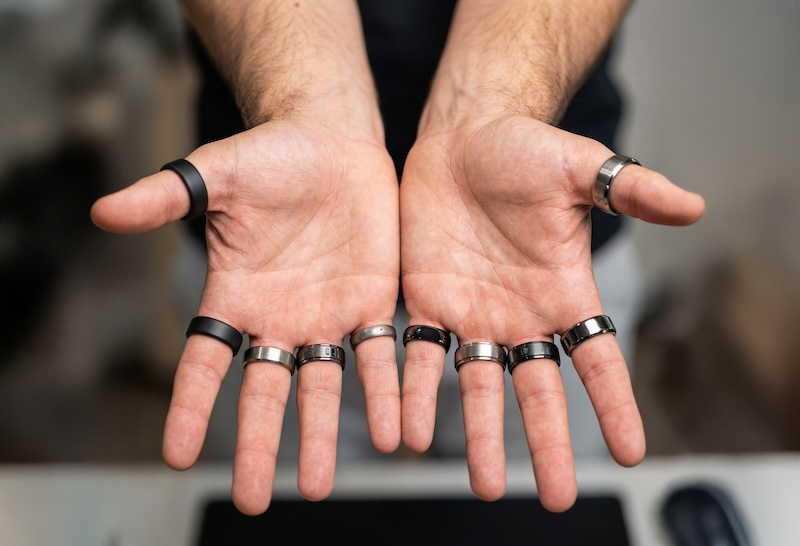
Almost one in three Americans now use a wearable device — a smart ring or watch — to support their health.1 They're popular for good reason:
Wearables measure biometric data — signals from your body like heart rate and temperature.
This allows you to track your sleep, stress levels, recovery after exercise, and overall health.
Seeing your body's real-time feedback can create positive changes in your life.
- ✅ Some users report better sleep, and a few even credit their weight loss to their smart ring.
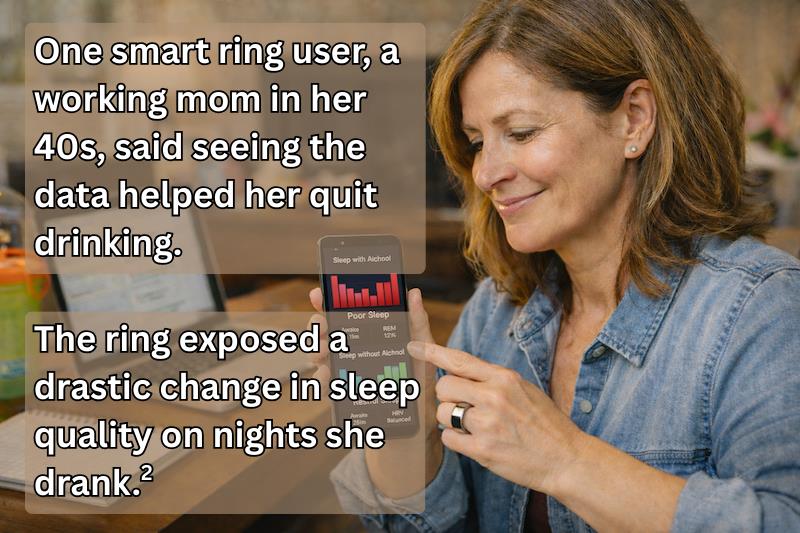
❌ That said, as many as 50% of people STOP using their wearable devices within the first year.3
(Yes, including the woman who quit drinking!)
So why do people quit?
After the novelty wears off, users say their ring data is overwhelming but not actionable.
Your ring accurately logs that your deep sleep dropped 18% last night.
But when the app suggests "try reducing screentime in the evening," it's offering the same response it gives to 4 million other users with the same score.
Most rings don't explain WHY you struggle with sleep, or what your body's unique needs are. This holds you back from making positive changes.
Instead, nearly every ring recycles the same basic tips. I'm sure you've heard them and tried them too:
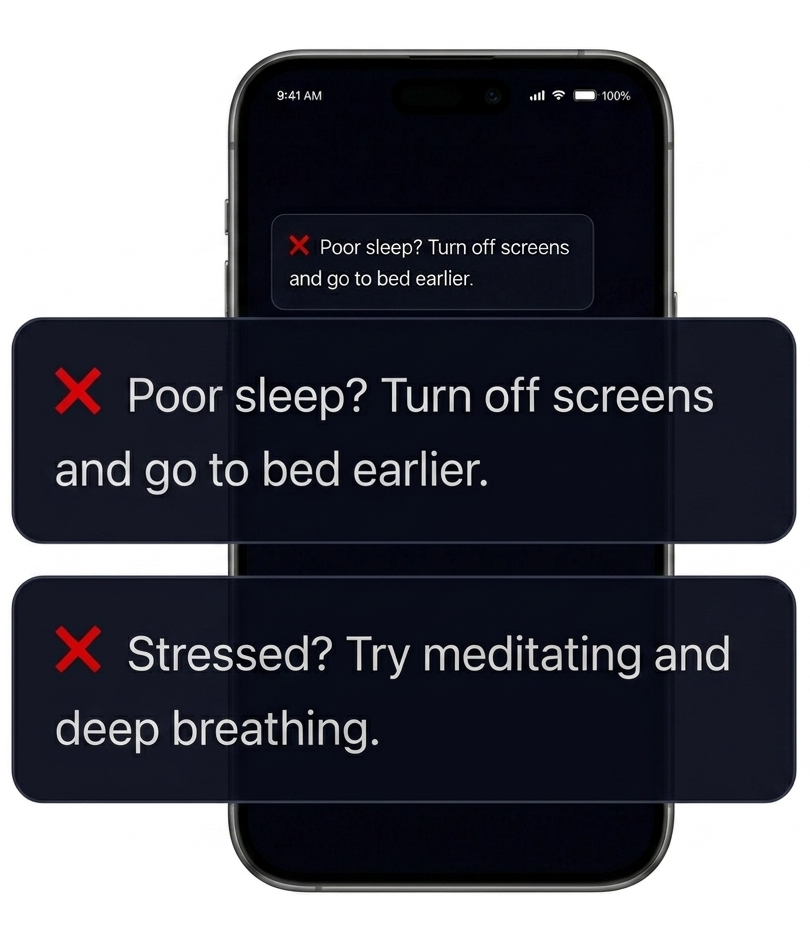
At some point, the ring's "insights" become just more notifications and more noise.
Psychologists call it "recommendation fatigue," and it's why people throw out their smart rings.
The best rings add 1 feature to fix this problem:
The ring reflects how YOUR body is wired.
It doesn't assume you need the same amount of sleep as the "average" person, or that your metabolism works the same as everyone else's.
For example, your best bedtime window for restful sleep is determined by genetics (specifically, a gene called NPSR1).
So if you're still feeling tired despite getting 8 hours of sleep, an Oura ring can't necessarily understand why. It may continue giving you outstanding sleep scores.
But the right ring takes this info into account when you look at your sleep data.
- ✅ It can suggest a simple tweak — like going to bed 15 minutes later — to help you sleep better and feel more energized throughout the day.
Modern medicine uses this same approach.
The best medical advice targets your unique genetics, instead of relying on what "should" work for the average person.
And when it comes to smart rings for daily, non-medical use, adding genetics offers that same, much-needed precision.
⭐ Studies show DNA-based health advice is followed more successfully than generic plans.4
A "DNA-aware" smart ring gives you the full picture: what's happening in your body, why it's happening, and what to do next.
That can mean:
Instead of your ring tracking steps and calories burned, but not seeing your weight budge...
✅ Learn which diet your metabolism likely responds best to
Instead of struggling with out-of-control stress...
✅ See your genetic stress reactivity, and catch stress before you're overwhelmed
Instead of feeling blindsided by aging...
✅ Your ring tells you:
→ which changes to watch out for (like joint discomfort, sleep disruption, heart problems)
→ It helps you monitor changes in your health trends over time
→ And lets you stay ahead of aging.
That's the difference between a gadget you wear for six months and a health tool you use for life.
A handful of companies are building in this direction.
Most are early — strong on hardware, thin on the genetics layer. Only one has built the full stack: a clinical-grade ring paired with over 300 DNA reports, with AI that connects the two in real time.
8 Key Factors to Consider When Buying a Smart Ring
- 🎯 Accuracy
Does the ring deliver reliable, clinically meaningful data — including sleep stages, HRV, and blood oxygen — that you can actually act on?
- 🔋 Battery Life
Does the ring hold a charge long enough to track you around the clock without constant interruptions?
- 📊 Features
Beyond basic activity tracking, does the ring offer meaningful extras like showing trends over time and AI-powered explanations?
- 💡 Personal Insights
Does the ring translate your data into personalized recommendations — not just numbers, but guidance that's specific to you?
- 😌 Comfort and Ease of Use
Is the ring comfortable enough to wear 24/7, with an app that makes checking your health data quick and intuitive?
- 💰 Price
Is the ring competitively priced with transparent subscription fees?
- 🎧 Customer Service
Does the company offer knowledgeable, responsive support to help with setup, results, and any issues that come up?
- ↩️ Return Policy
Does the company stand behind its product with a fair return window — and make it right if something doesn't work as promised?
What does DNA add that a normal wearable can't do?
Beyond disease risk, recent scientific advances show genetics has an impact on:
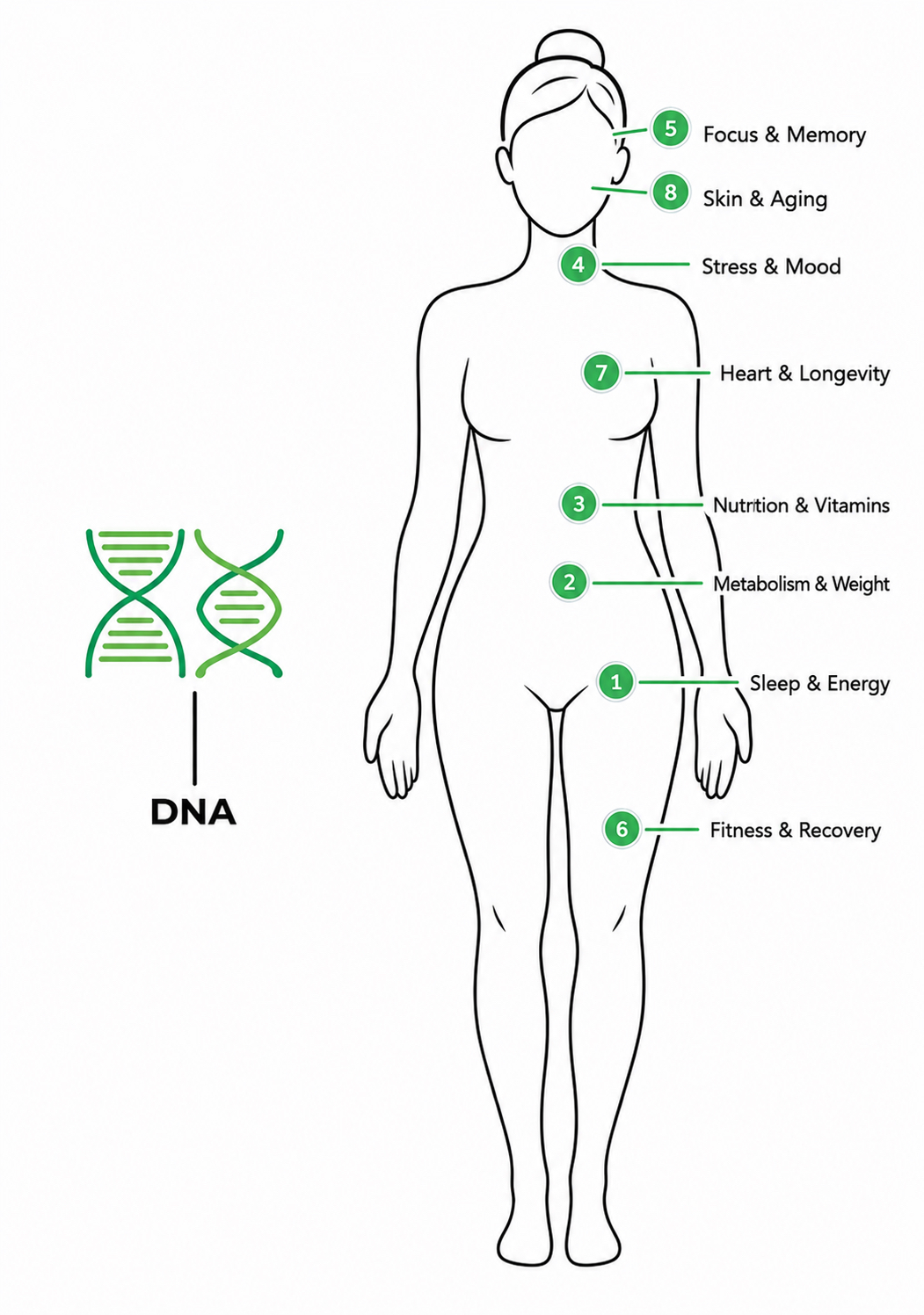
DNA insights can make health patterns in your wearable data feel less unpredictable.
Most importantly, a DNA-aware smart ring helps identify which habits and lifestyle changes are likely to work for YOU... not just what's trending.
This helps you see results for your health goals.
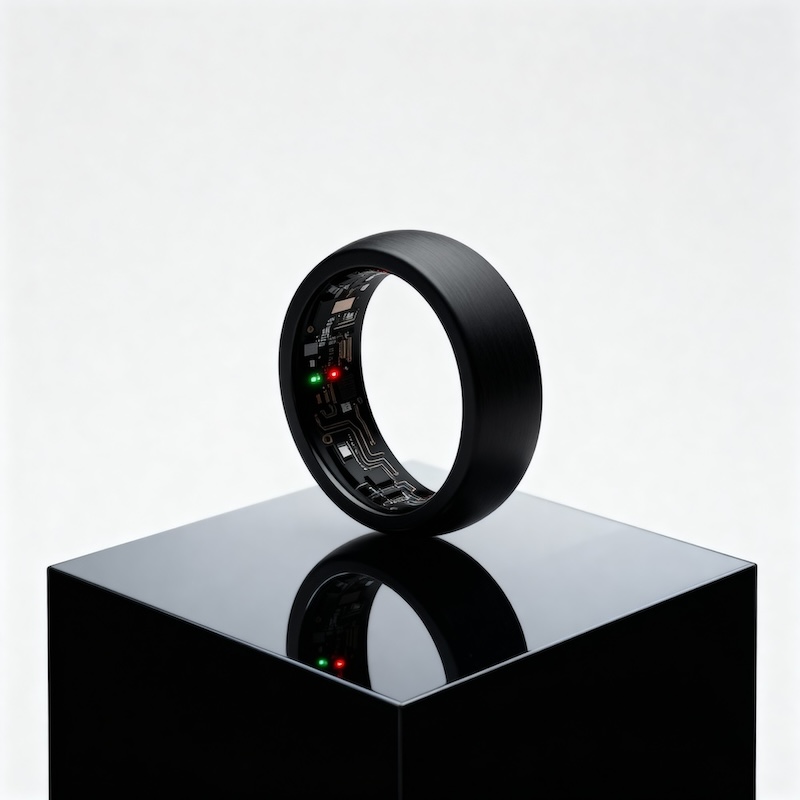
Our Top Smart Ring Pick: Pangenea
- Created by health scientists
- Combines daily health tracking + 300 DNA reports
- AI explains what your numbers really mean
- Tailored action plans within seconds
- Sleep, stress, aging, heart health, weight loss, and fitness
The company has been featured in:





Pangenea User Feedback
"My ring also let me know when I had a few days above normal temperature... it asked if I was feeling well or experiencing stress, which I was. Work had been exceptionally stressful that week and it was starting to show up on my body temp, sleep and HRV range. This helped me identify the stress earlier and address it... before it gets to digestive issues or eye twitching.
Pangenea helps me believe in the data. When a correlation between a couple of different data is tied in with a trend or DNA insight, then I feel more confident that it is telling me to pay attention."
Lisa B., Tucson, AZ, age 48

"It gives insights into heart health (my personal genetic concern) what stress does to my body and the stages of sleep and the amount of time spent in those stages. I use the info to help plan activity times, meals and sleep schedules."
Diana Ceperley, Westminster, CO, age 67

"I am learning the things that negatively affect my sleep, such as caffeine after 12:00 Noon. My sleep has improved, and I can look back at the previous day if I have a restless night to see what may be the culprit. No more lying awake when I go to bed.
Pangenea has made me more acutely aware of how I may inadvertently do things that affect my overall health... I am more confident in myself as it relates to doing the right things to increase my level of health."
Mary Jane N., Green Bank, WV, age 72

"I thought the data that I had from my Apple Watch was accurate, until I got the Pangenea Ring, which gives me much more information, that seems more true to what my body does... It's easy to wear, it holds a charge forever, and it doesn't long to recharge."
Roger Moore, Burgaw, NC, age 60

"My data was limited because I don't wear my watch 24/7. The ring I can wear all the time unless I'm charging it. I can check the app to see how my various systems are functioning. The input I get based on my DNA is fascinating.
I have a work environment that stretches my sleep patterns to their limits. Pangenea has helped me see what and where I need work to make sure I get the proper amount of rest."
Karen Balter, Dayton, OH, age 72
"I check the app frequently & try to increase steps, decrease calories, increase step based on results. I also saved readings for my doc to see. This last year my doctor said tracking my body temperature would be helpful because she thought my thyroid may be a new issue & having an extra low body temperature was another ( extra) symptom that shows constantly. Pangenea has validated when I have worked way too much because when I'm feeling so exhausted… I have checked the app & confirmed my VHR was showing I needed to take time to recover.
My Apple Watch tracked 2 things & a separate app tracked my sleep. The ring tells me a few more biofeedback items and all in one app. The readings seem very accurate. The Pangenea ring is very durable! I broke several Apple watches by accident. It also charges extra fast. Plus it stays charged a long time. Also it really is waterproof."
Brenda Wojtarowicz, Gulf Breeze, FL, age 58
"Other devices gave general information, that I knew was not being interpreted correctly by the devices or the apps. It was unbelievably frustrating. Pangenea understands that my quality of sleep is not recorded in hours, but in the length of deep sleep stages. Pangenea knew that I was dreaming and believed I was in a REM cycle and recorded it as such. I proved that my sleep is consistently nearly 45% deep sleep and that I am dreaming!"
Lisa Erickon, Helena, MT, age 61
"I was not sleeping long nor was I getting any deep sleep or REM sleep. I was told I was a restless sleeper and should get a weighted blanket to hold my legs steady. Since I was a night owl I needed to eliminate all sound and light sources to create late hours feeling and take a warm bath before bed. I now get deep and REM sleep!
I'm getting much better sleep and as a result much better health! I live in an assisted living facility where I get my bath three times a week. I'm finding that I have better sleep on my bath days than my non bath days!"
Mary Gardner Johnston, New Braunfels, TX, age 78
"The genetic insights hints at why I am a night owl and hate getting up early, and I have dramatically reduced my caffeine intake."
Aled Parry, Wales, age mid-fifties
"I've always been on high alert for any health issues that might arise. This wasn't great for my stress levels, especially since anxiety is a common state for me. Pangenea has been integral in shifting my mindset from a problem-based perspective, to affirming how healthy I actually am. This has eased my stress and significantly decreased my anxiety. I stopped obsessing over my anxiety, about my weight, and my general health. I hadn't any idea how much energy it took to constantly monitor and worry about my aging body!"
Cee M., Estes Park, CO, age 57
"Pangenea helped me make sense of poor sleep, weight struggle, low energy. Food changes improved. Blood pressure is much better where my meditation has made changes. Weight loss has been successful and has been kept off. Better workout with more comfort."
Elizabeth Dominge, Vancouver, BC, age 49
"Pangenea helped me understand my blood oxygen levels. I did not realize that feelings of tiredness were related to blood oxygen levels... Deep breathing would give me a lift. I have more energy, easing of depression."
Judy Taylor, Gresham, OR, age 73
"Makes it much easier to wear than bulky watches when you are a smaller sized person."
Jeff B., Wiarton, ON, age 61
"Before I got the Pangenea Ring, I experienced poor sleep more frequently than I liked. I am able now to review my week's sleep scores and align with various exercise classes and/or identify results from a stressful day. I like the tracking and it is easy enough to make the daily review of data a habit. I feel much better and now muscle soreness is likely to have a much smaller duration."
Pat W., The Woodlands, TX, age 71
"My family has a strong tendency to have high cholesterol & Pangenea has informed me that I should be careful of cardiac issues. Working on better sleep, working on having better control of my cholesterol level, and working on getting more steps in daily."
Judy U., age 69
"Honestly, I talk about Pangenea all the time because it's one of the first tools that made me feel like my data could tell a story instead of just generating numbers.
Sometimes it felt like the app was basically saying: 'Girl… HERE'S YOUR SIGN. 😄 '
Before, I often felt like I was reacting to my body instead of understanding it. I would push through stress, exhaustion, inflammation, poor recovery, or autonomic overload without realizing how far I'd already gone past my limits.
Tracking my physiologic patterns consistently helped me recognize early signs of stress accumulation, sympathetic activation, dehydration, poor recovery, and nervous system overload before reaching complete burnout. That awareness has helped me pace myself better, recover more intentionally, improve sleep habits, recognize triggers faster, and respond to my body with more accuracy instead of fear or frustration.
Most importantly, it helped me trust myself again."
Bethany Wesie, OH, age 40
"Pangenea linked my genetic results to the problems of poor sleep and stress. I am following the advice for better sleep and reduced stress, which in my case are very, very much linked."
Michael Holmwood, Vancouver, BC, age 81
Beyond simple scores and graphs, Pangenea explains why and gives next steps.
It's now the top wearable device we recommend for anyone who's:
- Curious about why their body responds the way it does
- Serious about nailing down better habits
- Wants to build routines guided by their body, not guesses
Although the DNA test adds to Pangenea's upfront price, it can still provide better value than the competition. At $348 total, it beats the Samsung Galaxy Ring at $399, Oura at $419+ ($349 + $70/year subscription), and Ultrahuman at $499.
The Pangenea ring is a solid investment in your health for life. It empowers you to understand what your body is telling you and make informed choices.
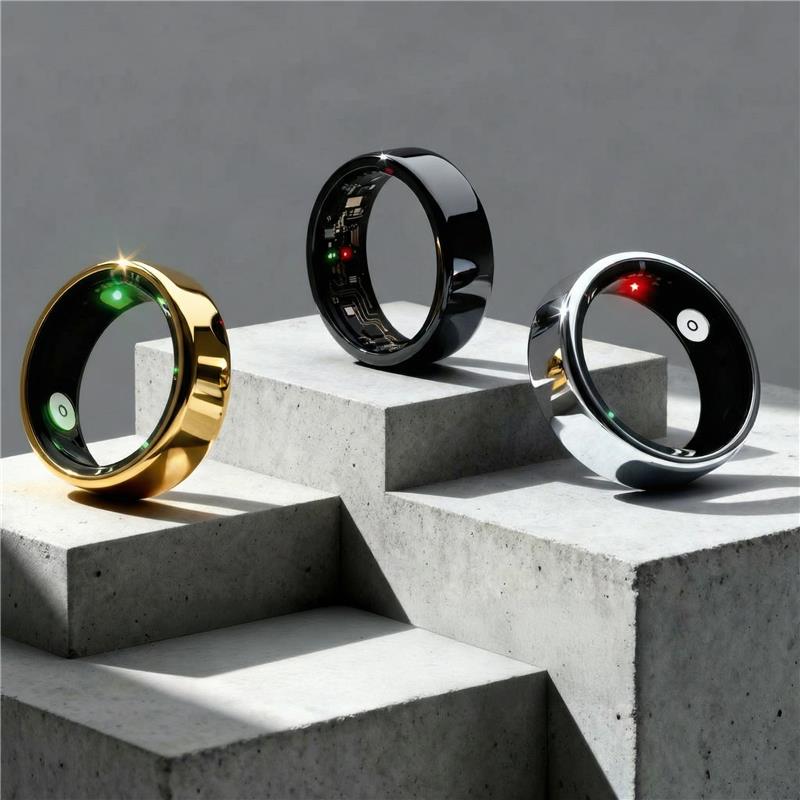
Not All Smart Rings Are Built the Same
| Generic Smart Ring | Pangenea |
|---|---|
| Metrics → scores Daily data summarized into readiness or recovery scores |
Metrics + DNA → insights Daily data paired with genetic tendencies for added context |
| Accuracy ranges by brand and type of device | Finger sensors more accurate than smart watches for sleep and heart rate.5 Temperature readings accurate to ±0.005°C. |
| General guidance Broad recommendations that apply to most users |
Tailored guidance Recommendations based on your genes, which can lead to a higher success rate4 |
| Static approach Tips and alerts stay the same across time. Helpful for steady reminders. |
Habit-testing approach Encourages experimenting with habits and tracking how patterns shift over time |
❌ Generic Smart Ring
Heart's Stress Response
Your Heart Rate Variability dropped 18% today.
Sleep Tracking
Your sleep score is 68. Try going to bed earlier.
✅ Pangenea Smart Ring
Heart's Stress Response
Your HRV dropped 18%. This could be because your OXTR gene variants suggest your oxytocin receptors may make you more sensitive to stress-inducing situations.
Your workplace stress yesterday may have triggered a cortisol spike that's still affecting your nervous system.
Based on your genetic recovery profile, here's your personalized recovery support to get you back on track today.
Sleep Tracking
Your sleep quality was 68 last night. You worked out late yesterday, which can affect your cortisol response.
Based on your OXTR gene variants, you may experience higher reactivity to stress, so those late workouts may be disrupting your sleep.
If exercising earlier in the day isn't an option for you, try to incorporate a wind down routine before going to bed to bring down your stress levels.
Who is this for?
✓Pangenea may be a good fit if:
- You want context, not just numbers
- You've tried generic wellness advice and it didn't stick
- You want to spot patterns and experiment with habits
❌ Pangenea may not be right for you if:
- You want a medical diagnosis or treatment plan
- You won't wear it most nights (sleep insights will be limited)
The DNA-aware approach works best for people who feel that scores alone don't tell the full story. It's especially useful if you want to build routines that fit your biology.
For example, if you want to learn your natural sleep and energy rhythms — not just how well your current routine performs — you can only get this insight through DNA data.
That said, DNA-aware devices do require an extra step: a DNA test, which means it takes a couple weeks after purchase for you to get the full experience.
Privacy & Data Control
Pangenea is fully compliant with federal genetic privacy laws and follows strict standards beyond what the law requires. They do not sell customer data to other companies.
Biometric and wellness data
Raw biometric and health data stays on your device. No external systems can access it.
DNA data and test kits
DNA test kits are anonymized by design. Kit numbers are kept separate from any identifying information, so genetic data is not directly linked to an individual. DNA samples are destroyed after analysis.
AI conversation data
Conversations in the app are stored securely on Pangenea servers. This data is only used in aggregated form to improve the system and for statistical analysis. Pangenea employees cannot view individual conversations.
Legal protections
Federal laws place strict limits on how genetic information can be used, helping protect against misuse.
For full details, including data-handling practices and user controls, see the links below.
View Privacy Policy View Data Practices
The company behind Pangenea has been pursuing genetic research for more than 10 years. They are led by Dr. Alexei Fedorov. Fedorov has been in this field for 35 years. As of this writing, he has published almost one hundred highly influential research papers and serves as Director of the University of Toledo’s prestigious Bioinformatics Lab.
Pangenea offers an industry-leading 30-day refund guarantee on the Pangenea ring. They also refund the cost of the DNA test if results do not arrive within 8 weeks. They are the only DNA test provider to offer a guarantee of this sort.
FAQ
The Pangenea ring tracks your body's signals 24/7. You also take a one-time DNA test, which generates more than 300 genetic reports.
The Pangenea app combines this genetic information with your wearable data. Its algorithm delivers personalized tips and answers questions about your health and body.
The Pangenea ring is designed for all-day and overnight comfort. It weighs less than many leading smart rings because it uses a flexible battery material. This reduces bulk without sacrificing battery life.
The ring is made from titanium, the world's most biocompatible metal. That means it does not cause allergic reactions and is commonly used in medical implants.
The ring takes only 2 steps and under 5 minutes to set up. The DNA test takes another 5 minutes, and the box it arrives in is already labeled for return shipping.
The Pangenea ring lasts up to seven days on a single charge. It fully charges in about one hour. The portable charging case can recharge the ring up to five times before it needs to be plugged in.
Titanium is as strong as stainless steel and naturally scratch resistant. It is also fully corrosion resistant and unaffected by oils or residue on your skin.
You can purchase an optional two- or three-year hardware warranty. It covers damage, water exposure, battery performance issues, and manufacturing defects. Pangenea covers replacement shipping both ways.
Genetic and wellness data is personal. Pangenea uses strict boundaries around how information is stored, used, and accessed.
Pangenea does not sell user data. Employees cannot access personal information, and all internal data is anonymized for statistical use only. Biometric data is stored on the user's device, and DNA samples are destroyed after analysis.
You can purchase the Pangenea ring on its own without taking a DNA test.
The ring alone delivers full health and fitness tracking, including heart rate, sleep patterns, body temperature, and more. What it does not include is DNA-based AI insights.
The greatest value comes from combining the Pangenea ring with a DNA test and Pangenea AI.
Pangenea tracks sleep stages (REM, deep, and light), resting heart rate and heart rate variability (HRV), body temperature, blood oxygen (SpO₂), respiratory rate, activity and calories, and stress and recovery.
Your first year of Pangenea is included with the base purchase. After that, access to AI and DNA integration costs $129 per year.
If you choose not to renew, you will still keep full access to all ring tracking features.
No. Pangenea is not a medical device or a diagnostic tool. The insights provided are not medical advice.
Sources
- Dhingra LS, Aminorroaya A, Oikonomou EK, et al. Use of Wearable Devices in Individuals With or at Risk for Cardiovascular Disease in the US, 2019 to 2020. JAMA Netw Open. 2023;6(6):e2316634. doi:10.1001/jamanetworkopen.2023.16634
- Whole-Salamander4571. "14 Months in Review and Why I'm Quitting the Ring." Reddit. May 2024. https://www.reddit.com/r/ouraring/comments/1l0n630/14_months_in_review_and_why_im_quitting_the_ring/
- Christiane Attig, Thomas Franke. Abandonment of personal quantification: A review and empirical study investigating reasons for wearable activity tracking attrition, Computers in Human Behavior, Volume 102, 2020, Pages 223-237, ISSN 0747-5632, https://doi.org/10.1016/j.chb.2019.08.025
- Petti C, Bojko E. Effects of DNA-based recommendations on health-related behaviour changes. Proceedings of the Nutrition Society. 2023;82(OCE2):E200. doi:10.1017/S0029665123002094
- https://www.livescience.com/health/how-accurate-are-smart-rings-and-how-do-they-compare-to-fitness-watches
Turn Health Data Into Real Answers
Discover how the Pangenea DNA-aware smart ring combines wearable tracking with genetic insights to explain why your body responds the way it does.
Tap Here to ExploreAbout
Genetics Digest aims to educate consumers about the benefits of DNA testing. We believe it is the future of family research, nutrition, health, wellness and deeper self-knowledge. We are affiliated with CRI Genetics.